The Science Behind Umami and How to Enhance It
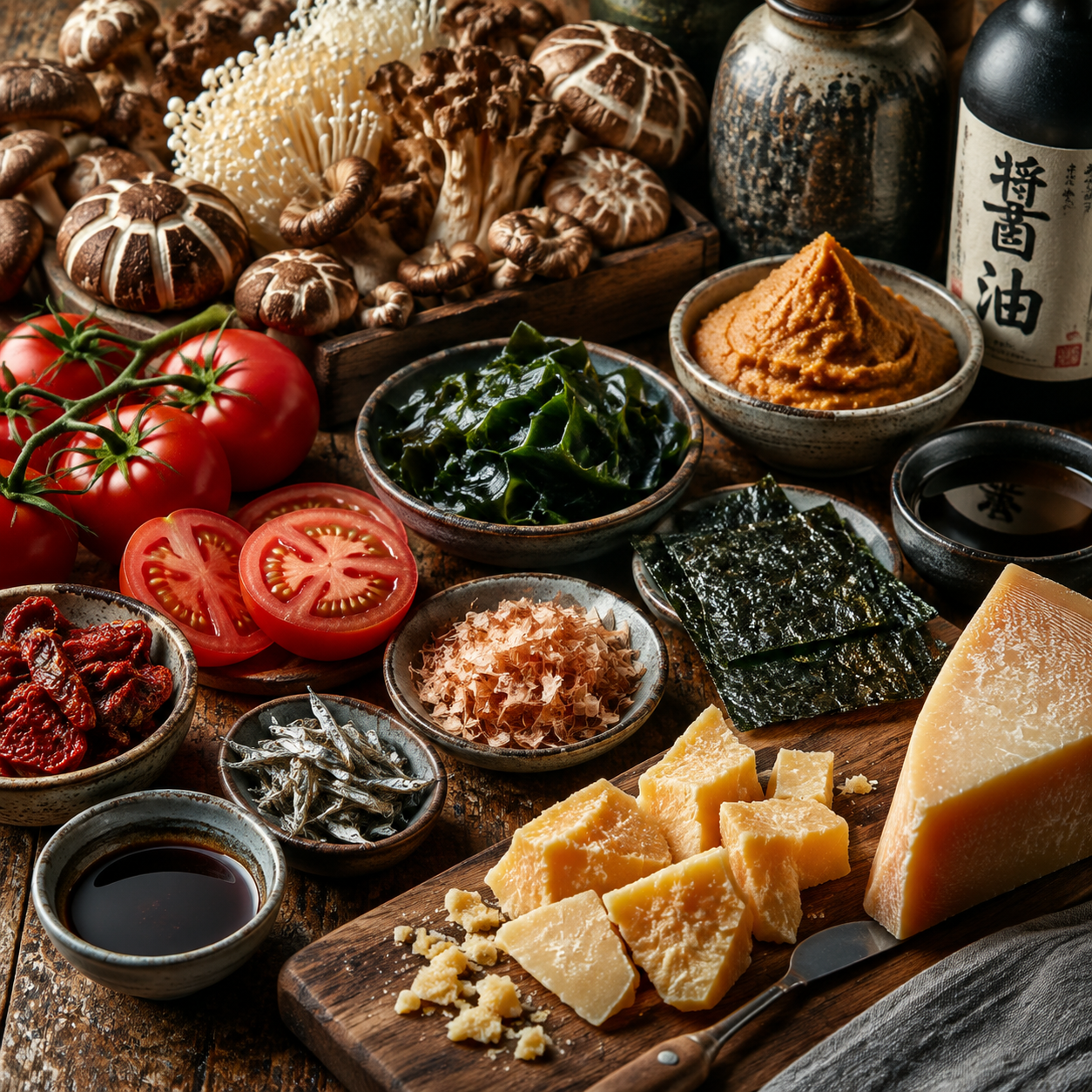
Umami gives food its deep, savory, mouth-filling character. It appears in a ripe tomato, a bowl of mushroom broth, aged Parmesan, fermented miso, and a carefully balanced sauce. Understanding the science behind umami makes it easier to build satisfying flavor at home without relying on extra salt.
What Is Umami?
Umami is one of the five basic tastes, alongside sweet, sour, salty, and bitter. It describes a savory, rounded sensation that can make a dish feel fuller and more complete.
The word umami comes from Japanese and is often translated as “pleasant savory taste.” Unlike aroma, which travels through the nose, umami is detected by taste receptors on the tongue. It can linger after a bite and create a gentle, mouth-watering effect.
Umami is sometimes treated as a synonym for savory, and the two terms overlap in everyday cooking. However, savory is a broad description of foods that are not sweet, while umami identifies a specific taste response. A salty broth may lack depth; a well-made mushroom and miso sauce can taste intensely umami even when its salt level is moderate.
That distinction matters when adjusting recipes. Adding salt increases saltiness. Adding a glutamate-rich ingredient can increase savory depth. The two often work together, but they are not interchangeable.
The Science Behind Umami Flavor
Glutamate activates umami taste receptors, while compounds called inosinate and guanylate can strengthen that signal when they occur together. This interaction explains why certain ingredient combinations taste much more savory than either ingredient alone.
Glutamate is an amino acid found naturally in many foods. In its free form, it can interact with specific taste receptors, including receptors commonly described as T1R1/T1R3. These receptors respond to the presence of umami compounds and send a taste signal to the brain.
Foods contain glutamate in different amounts depending on their variety, ripeness, aging, and processing. Fermentation and cooking can also change how available flavor compounds become. Tomatoes become more savory as they ripen, while aged cheese develops concentrated umami as moisture leaves and proteins break down.
Inosinate, also known as inosine monophosphate or IMP, occurs especially in meat, poultry, and fish. Guanylate, or guanosine monophosphate, is particularly associated with dried mushrooms and some other fungi. When glutamate meets inosinate or guanylate, the receptors receive a stronger combined signal. This is called umami synergy.
For a deeper overview of taste perception and flavor compounds, readers can consult the National Center for Biotechnology Information Bookshelf. The cooking lesson is simple: pair ingredients from different umami groups instead of repeatedly adding one salty condiment.
Natural Sources of Umami
Natural umami sources include aged foods, ripe produce, mushrooms, seaweed, meat, and fermented ingredients. Each contributes a different balance of glutamate, inosinate, guanylate, aroma, salt, and texture.
- Aged cheeses: Parmesan, pecorino, and other mature cheeses gain savory intensity as proteins break down during aging.
- Mushrooms: Shiitake, porcini, and other mushrooms provide glutamate and, especially when dried, guanylate. Rehydrating dried mushrooms also creates a flavorful liquid for sauces and soups.
- Tomatoes: Ripe tomatoes, tomato paste, and slow-cooked tomato sauces offer glutamate. Concentrated tomato paste can add depth to braises, gravies, and vegetable dishes.
- Seaweed: Kombu is a classic glutamate-rich ingredient used to build dashi and plant-based broths.
- Meat, poultry, and fish: These foods supply glutamate and inosinate. Browning adds roasted aromas, which complement their savory taste.
- Fermented foods: Miso, soy sauce, fish sauce, fermented bean pastes, and similar ingredients develop complex flavor as microorganisms transform proteins and carbohydrates.
- Savory sauces: A measured spoonful of soy sauce, miso glaze, mushroom sauce, or fermented chili sauce can distribute umami evenly through a dish.
Freshness and preparation affect perception. A raw mushroom may taste mild, while a browned mushroom cooked with stock tastes far more concentrated. Likewise, tomato paste briefly fried in oil develops a darker, fuller flavor than tomato paste stirred in at the end.
How Umami Compounds Work Together
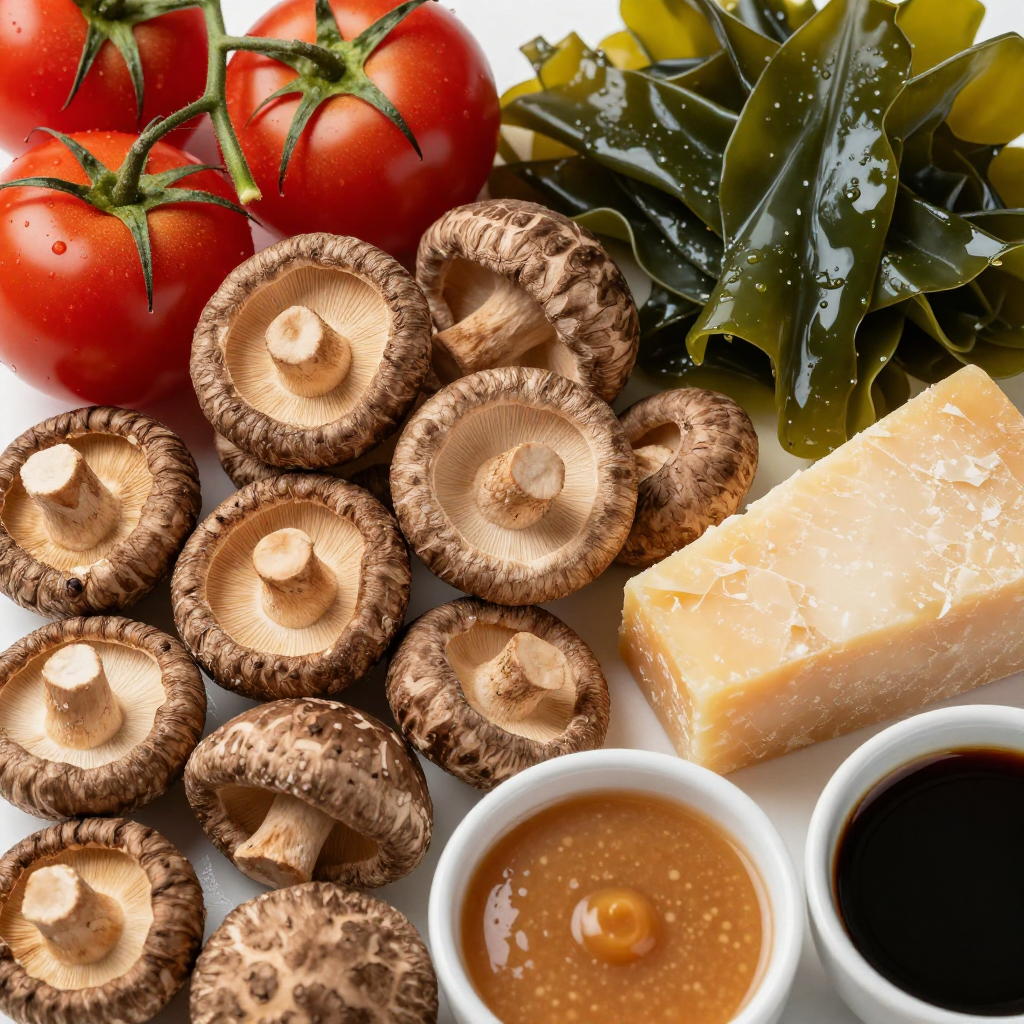
Umami compounds work together through synergy: glutamate-rich ingredients become more powerful when paired with inosinate from meat or guanylate from mushrooms. This gives cooks a reliable way to create depth with smaller amounts of each ingredient.
Consider a mushroom and chicken sauce. The mushrooms contribute glutamate and guanylate, while the chicken contributes inosinate. Add a small amount of miso or soy sauce, and the sauce gains another layer of fermented glutamate. The result can taste richer than a sauce made from a large quantity of any single ingredient.
A useful framework is the three-layer umami build:
- Foundation: Start with a stock, tomato base, mushrooms, seaweed, or browned vegetables.
- Amplifier: Add a fermented ingredient such as miso, soy sauce, fish sauce, or a bean paste.
- Finisher: Use a small amount of aged cheese, mushroom liquid, meat juices, or a savory condiment just before serving.
Choosing more umami for depth often means accepting more salt, stronger aromas, or a heavier finish. Taste as you go, especially with concentrated products. Fermented sauces vary considerably in saltiness, so a teaspoon may be enough for one brand while another recipe needs more.
How to Enhance Umami with Sauces
To enhance umami with sauces, combine one concentrated savory ingredient with a flavorful base, then balance the mixture before serving. Small additions work best because sauces distribute taste across an entire dish.
Soy Sauce
Soy sauce adds fermented glutamate, salt, color, and a roasted aroma. Stir it into noodle sauces, pan juices, marinades, stir-fries, and vegetable glazes. Add it late enough to preserve its aroma, but allow a minute or two of simmering when you want a more integrated flavor.
Miso
Miso brings fermented soybean flavor, gentle sweetness, and savory depth. Whisk it into warm stock, blend it with butter for roasted vegetables, or thin it with citrus juice and water for a salad dressing. Avoid boiling miso aggressively for a long time if you want to preserve its brighter fermented notes.
Mushroom Sauces
For a mushroom sauce, brown sliced mushrooms until their moisture evaporates, then add stock, a splash of soy sauce, and a little cream or butter if appropriate. Dried mushroom soaking liquid can intensify the base, but strain it first to remove grit.
Tomato-Based Sauces
Tomato sauce becomes more savory when you cook tomato paste in oil for two to three minutes before adding liquid. Garlic, mushrooms, Parmesan rind, or a small amount of miso can add dimension. Use restraint: too many concentrated ingredients can make the sauce taste muddy.
Other useful options include fish sauce in a stew, Worcestershire sauce in a meat glaze, or a fermented chili sauce in beans and braises. The right choice depends on the dish’s aroma, dietary needs, and desired texture.
Balancing Umami in Cooking
Balance umami-rich food with acidity, sweetness, bitterness, heat, salt control, and texture. These elements prevent a deep savory flavor from becoming flat, heavy, or overwhelming.
- Acidity: Lemon juice, rice vinegar, wine, or tomatoes can brighten a rich sauce. Add acid gradually at the end so it remains fresh.
- Sweetness: A small amount of sugar, honey, caramelized onion, or naturally sweet vegetables can soften harsh fermented notes.
- Salt: Taste before salting. Soy sauce, miso, stock, cheese, and fish sauce may already provide enough sodium.
- Bitterness: Greens, charred vegetables, or bitter herbs can add contrast, though they may need fat or sweetness for balance.
- Heat: Chili, black pepper, ginger, and mustard create lift and keep a savory sauce from tasting sleepy.
- Texture: Crisp toppings, fresh herbs, toasted seeds, or crunchy vegetables contrast with a soft, concentrated sauce.
A practical tasting sequence is depth, salt, brightness, then texture. First ask whether the dish needs more savory character. Next check salt. Then add acidity or sweetness in small increments, and finish with something fresh or crisp when the sauce feels too dense.
Practical Umami-Building Tips for Everyday Meals
Build umami in everyday meals by concentrating ingredients, pairing complementary sources, and finishing with a measured sauce. These techniques work across vegetables, grains, proteins, soups, marinades, and finishing sauces.
- Vegetables: Roast mushrooms, eggplant, onions, or tomatoes until browned, then toss them with a miso-tahini or soy-lime sauce.
- Grains: Cook rice, barley, or farro in mushroom stock or kombu-infused water. Finish with Parmesan, herbs, and a few drops of soy sauce.
- Proteins: Marinate tofu, chicken, fish, or meat with miso, soy sauce, garlic, and an acidic ingredient. Reserve part of the mixture before it touches raw protein to use as a finishing sauce.
- Soups: Start with browned aromatics, add stock and mushrooms, then stir in miso or a small amount of soy sauce after reducing the heat.
- Marinades: Combine an umami ingredient with oil, acid, aromatics, and a touch of sweetness. This creates flavor and helps prevent a one-note salty result.
- Finishing sauces: Keep a concentrated mushroom, tomato, miso, or fermented chili sauce ready for roasted vegetables, eggs, noodles, and leftovers.
One common mistake is adding several salty sauces at once. People do it because each ingredient tastes good alone, but the combined result can hide the original food and become difficult to correct. Add one main amplifier, taste, and dilute with unsalted stock, water, cream, or vegetables if needed.
Another mistake is skipping browning. A sauce can contain plenty of glutamate and still taste thin if it lacks roasted aromas and concentration. Give onions, mushrooms, or tomato paste enough cooking time to develop complexity before adding liquid.
Frequently Asked Questions About Umami
These answers summarize how umami tastes, where it comes from, and how sauces can make it easier to control.
What does umami taste like?
Umami tastes savory, brothy, rounded, and mouth-filling. It can make food feel more substantial and may leave a lingering, pleasant sensation.
Is umami the same as savory?
Umami is a specific basic taste caused by compounds such as glutamate, while savory is a broader description of non-sweet, often hearty foods. A dish can be savory without having much umami.
Which ingredients are naturally high in umami?
Common sources include aged cheeses, mushrooms, ripe tomatoes, seaweed, meat, fish, poultry, soy sauce, miso, and other fermented foods. Their flavor strength depends on ripeness, aging, concentration, and cooking method.
How can sauces enhance umami?
Sauces concentrate and distribute umami ingredients. Soy sauce, miso, mushroom sauces, tomato reductions, and other fermented condiments can add depth to vegetables, grains, proteins, soups, and marinades.
Can too much umami make a dish taste unbalanced?
Yes. Too many concentrated ingredients can create a salty, heavy, or indistinct flavor. Restore balance with unsalted liquid, acidity, a little sweetness, fresh herbs, heat, or contrasting texture.
Once you recognize umami as a taste rather than simply a synonym for salt, sauce-making becomes more deliberate. Pair glutamate with inosinate or guanylate, build flavor in layers, and adjust brightness at the end. That approach produces sauces with depth while leaving the main ingredients recognizable.