The Rise of Artisanal Ketchups: Beyond the Basic Tomato
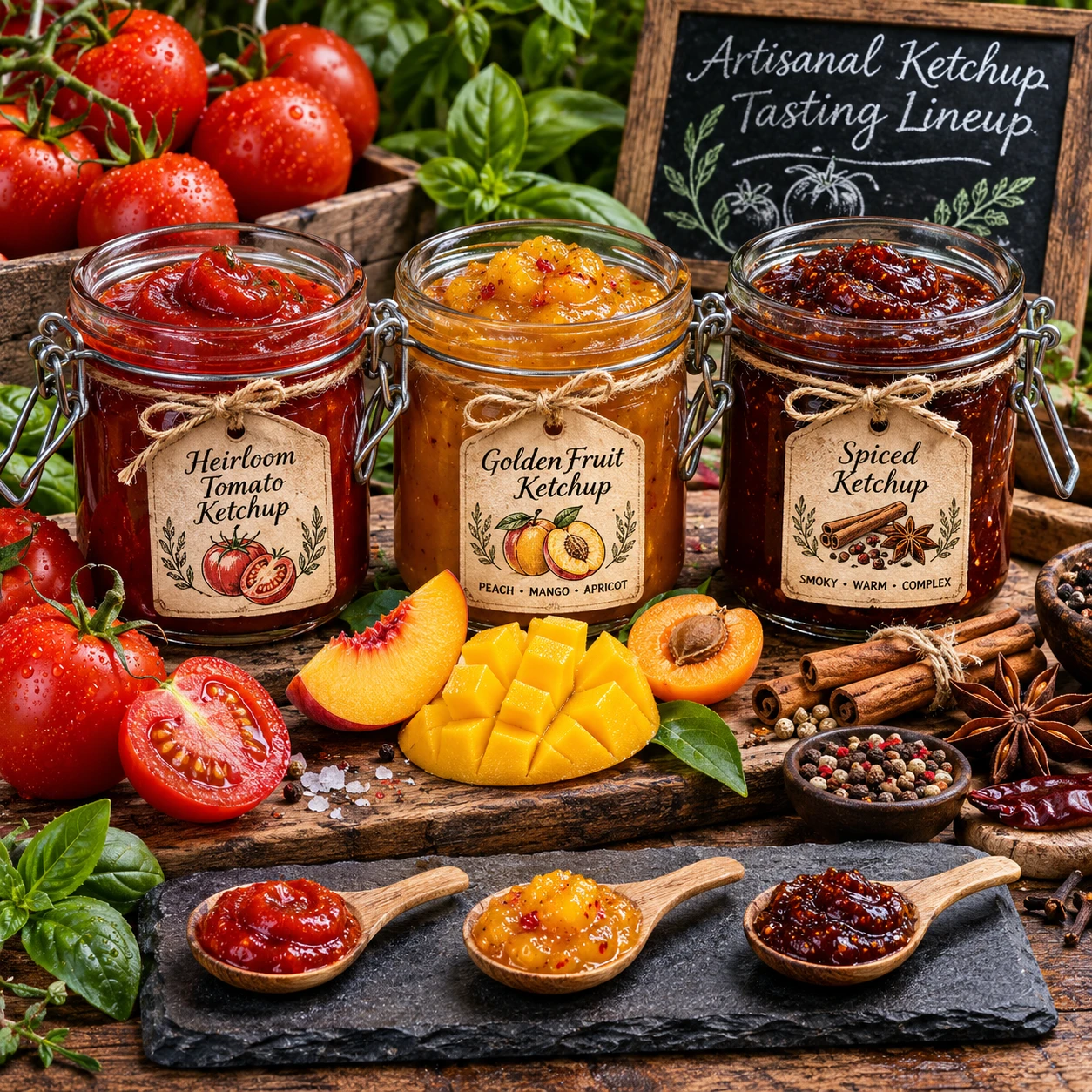
Ketchup has a familiar job: a bright, sweet-tangy dip for fries or a burger topping. Artisanal ketchup widens that role. Small-batch recipes may highlight a particular tomato, introduce fruit or vegetables, or use spices and sweeteners to create a more distinctive flavor.
That variety does not make every jar better, healthier, or more carefully made by default. It does give curious eaters more to explore, and a useful reason to think about ketchup as a sauce with its own ingredients, texture, and food pairings.
What Makes Ketchup Artisanal?
Artisanal ketchup generally refers to ketchup made in smaller batches with a distinctive recipe or ingredient focus. The term has no single universal production standard, so the label alone cannot tell you how a sauce was made or where its ingredients came from.
Compared with conventional tomato ketchup, which often aims for a consistent, familiar sweet-and-tangy profile across large production runs, an artisanal variety may emphasize a specific tomato, a more pronounced spice blend, or a less conventional balance of sweetness and acidity. Small-batch production can make it practical to develop and refine unusual recipes, but it does not guarantee better ingredients or flavor. The ingredient list and the taste matter more than the label.
Recipes vary. One maker might use ripe tomatoes, vinegar, sugar, salt, and spices; another may add roasted peppers or fruit. Some sauces are smooth, while others retain a little texture. The useful question is what the maker chose to bring forward: tomato character, heat, smoke, sweetness, or something else.
- Ingredient focus: A named tomato variety, fruit, vegetable, or spice can signal the intended flavor.
- Recipe character: Look for details such as smoked, peppery, tart, or reduced-sugar, then check the ingredients to see what supports those claims.
- Production claims: Small-batch describes scale, not necessarily sourcing, nutrition, or quality.
Beyond the Standard Tomato
Artisanal ketchup can use different tomato varieties or replace tomatoes with other fruits and vegetables. These choices change the sauce’s color, sweetness, acidity, body, and aroma.
Heirloom tomatoes are one route beyond a uniform tomato profile. Depending on the variety and growing conditions, they may bring a notably fruity, earthy, or gently sweet character. A ketchup made with a particular heirloom tomato can still include vinegar and sweeteners; the distinction is that the tomato’s own flavor may be more apparent. Color can vary too, from deep red to golden or dusky tones, so appearance alone is not a dependable guide to taste.
Other recipes use ingredients such as apples, pears, plums, berries, pumpkin, or roasted peppers. These can provide body and natural sweetness, along with their own acidity and aroma. A fruit-based ketchup may taste brighter or more fragrant; one built around peppers can lean vegetal, smoky, or gently hot. These sauces may be called fruit or vegetable ketchups even when tomato remains part of the recipe, so read the ingredient list rather than assuming the name tells the whole story.
Alternative ingredients change the sauce’s center of gravity. They do not make it a direct substitute for every conventional ketchup. A plum-forward version, for example, may work beautifully with roasted meat but feel out of place if you expect the clean tomato tang of a classic fry dip.
A Wider World of Flavors
Artisanal ketchup gets its personality from the balance of spices, acidity, sweetness, and texture. A small change in any one of these can shift a sauce from familiar to distinctly savory, tart, fruity, or warm.
Spices and seasonings provide much of the variation. Black pepper and chili can add heat; cloves, cinnamon, or allspice bring warmth; garlic and onion deepen savory notes. Smoked spices may create a grill-friendly flavor, while herbs can make a recipe feel brighter. A well-balanced sauce lets these flavors support the main ingredient rather than bury it.
Acidity, usually from vinegar or another tart ingredient, gives ketchup its lift and helps balance sweetness. Sweeteners may include sugar, brown sugar, honey, or fruit-derived sweetness, but their presence does not automatically determine whether a ketchup is nutritious or suitable for a particular diet. Check the label for the amount and type that matter to you. Texture also changes the experience: a smooth ketchup coats fries evenly, while a thicker or slightly textured one can cling to sandwiches and grilled foods.
- Bright and tangy: More noticeable acidity keeps rich or fried food from tasting heavy.
- Warm and spiced: Aromatic seasonings add depth to roasted vegetables, sausages, or meat.
- Fruity and mellow: Fruit sweetness can soften sharp vinegar and suit mild cheeses or roast dishes.
- Smoky or hot: Smoke and chili bring a stronger finish, so start with a small taste before using generously.
How to Choose and Taste Artisanal Ketchup
Choose artisanal ketchup by checking its ingredients, deciding what flavor you want, and tasting it in a way that makes comparisons fair. No single style is best for everyone; the right choice depends on the food and your own preference.
Start with the label. Look for the main ingredients, the sweetener, vinegar or other acidic components, and any spices or flavorings. If you have an allergy, dietary restriction, or preference about sugar, use the full ingredient and nutrition information rather than relying on words such as natural, craft, or small-batch. Claims about local sourcing also need specific details; artisanal does not automatically mean locally made.
For a simple tasting, put a small spoonful of each ketchup on a plain plate. Smell it first, then taste a little on its own. Notice four things: the main ingredient, the first impression of sweetness or acidity, any heat or spice that develops, and the finish. Finally, try it with a neutral food such as a plain cracker or a piece of roasted potato. A sauce that tastes bold by itself may settle into balance when paired with food.
Avoid judging solely by color, price, or an eye-catching ingredient. Darker does not necessarily mean smokier, and an heirloom tomato on the label does not guarantee that its flavor will stand out. If you are unsure, choose a small jar or sample size when available. That limits waste while you learn which profiles suit your meals.
Pairings Beyond the Usual
Artisanal ketchup pairs well with far more than fries and burgers when its flavor matches the dish. Use bright, spicy, smoky, or fruit-led varieties to complement the food rather than overpower it.
A tangy tomato ketchup can cut through rich foods such as grilled cheese, sausages, or crispy potatoes. A peppery version brings more interest to egg sandwiches and roasted vegetables. Smoky ketchup works naturally with grilled mushrooms, barbecue chicken, or a bean burger, while a fruit-forward style can complement roast pork, sharp cheddar, or a simple cheese board.
Think about how the sauce will be used. A thin, smooth ketchup is easy to dip and spread; a thicker one can act more like a condiment for a sandwich or a spooned finish for roasted food. For a first try, serve a small amount alongside the dish instead of coating everything. That makes it easier to notice whether the acidity, sweetness, or spice improves the pairing.
- Snacks: Try tangy tomato ketchup with potato wedges, or a mildly spiced version with onion rings.
- Sandwiches: Add pepper or chili ketchup to egg, cheese, or vegetable sandwiches.
- Grilled foods: Match smoky ketchup with grilled vegetables, burgers, or sausages.
- Cheese and roast dishes: Test fruit-based ketchup with cheddar, roast pork, or other savory dishes that welcome a hint of sweetness.
Is Artisanal Ketchup for You?
Artisanal ketchup is worth exploring if you enjoy comparing flavors or want a condiment that contributes something specific to a meal. Conventional tomato ketchup remains a dependable choice when you want a familiar, consistent sweet-tangy taste.
The practical difference is choice. Artisanal varieties can offer a wider range of tomato character, alternative ingredients, spices, and textures, but some may be more expensive or too strongly flavored for everyday use. A distinctive recipe also will not suit every dish. If you mainly want a simple dip for fries, your usual bottle may do the job well.
Start with the flavor you already like, then move one step outward: a brighter tomato ketchup, a warmer spice blend, or a fruit-led sauce. Read the label, taste a small amount, and pair it with food that can meet its intensity. That approach turns a jar of ketchup into a considered part of the meal, without asking it to be anything more than a good sauce.