How to Properly Store Sauces to Maintain Freshness
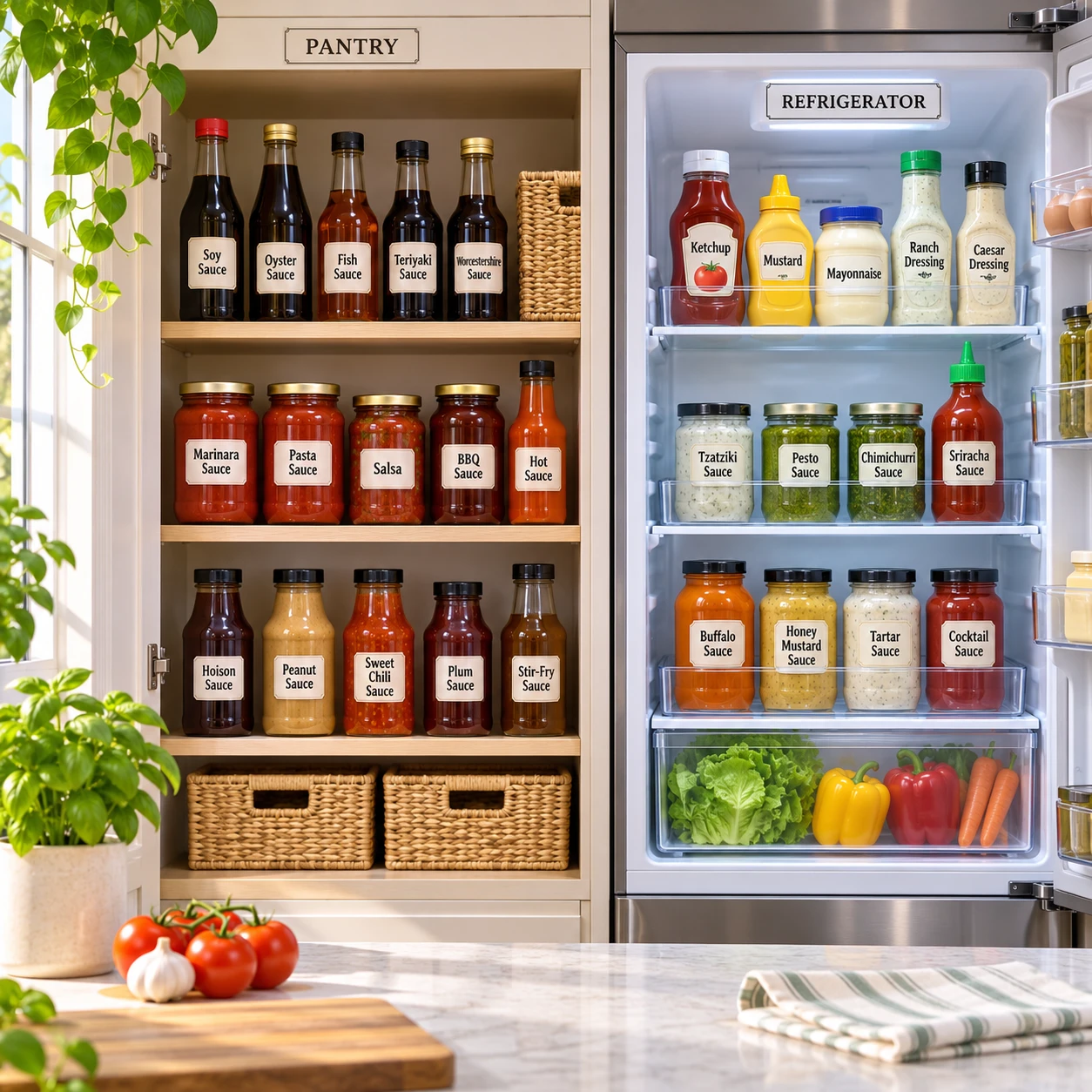
A sauce can bring a meal together, but its flavor and texture depend in part on how you store it. The right approach varies: an unopened bottle may belong in a pantry, while an opened one may need refrigeration. Check the label, use clean utensils, and keep sauces away from conditions that can shorten their quality.
Why proper sauce storage matters
Proper sauce storage helps preserve flavor, texture, and appearance while supporting safe handling. Temperature, light, air, and contamination can all affect a sauce, so storage habits should match the product rather than follow one rule for every bottle.
Heat and direct sunlight can dull flavors or change a sauce’s color and consistency over time. Exposure to air can also affect quality, especially when a cap is left loose or a jar is repeatedly opened. Refrigeration slows quality changes for products whose labels call for it, though it can thicken some sauces or make oils firm. That texture change may ease once the sauce sits briefly at room temperature, if the label permits.
Food safety is part of the picture, too. A bottle’s closure and the way it is handled help limit the introduction of food particles or microbes. Because sauces vary in ingredients and processing, **storage advice for one type should not be assumed to apply to another**. Follow the product’s directions for the best balance of freshness and safe use.
Check the label first
The label is the best starting point for storing any sauce. It tells you whether the product should be refrigerated before or after opening, and may include handling instructions and a best-before date.
Look for phrases such as “refrigerate after opening” or “store in a cool, dry place.” Keep those directions with the bottle in mind even if another sauce in your cupboard has different instructions. Ingredients, acidity, packaging, and processing can all affect how a particular product should be handled.
A **best-before date generally concerns quality**, not a guarantee that a product will remain unchanged until that date under every storage condition. Check whether the date applies to an unopened product and follow any separate guidance for opened sauces. If instructions are missing or unclear, consult the manufacturer rather than guessing, especially for a product that has been stored outside its recommended conditions.
Where to store unopened sauces
Store unopened sauces according to the label, usually in a cool, dry place away from direct sunlight and heat. A pantry or cupboard is often suitable when the product does not require refrigeration before opening.
Choose a shelf away from ovens, stovetops, radiators, and sunny windows. Repeated exposure to heat can affect a sauce’s quality, while moisture may damage labels or packaging. Keep bottles upright when practical, particularly if the cap or seal could leak.
Before opening, check the packaging for damage, leaks, or a broken seal. A compromised container may not protect the sauce as intended, so avoid using it and follow the seller’s or manufacturer’s advice. Rotate pantry stock so older products are used first, while still checking the date and condition rather than relying on date order alone.
Some sauces are sold in refrigerated cases or carry instructions to keep them chilled even when unopened. Those products should go into the refrigerator promptly after purchase. **The storage directions on the specific package take precedence** over general pantry guidance.
How to store sauces after opening
After opening, refrigerate a sauce when its label says to do so, and close the bottle or jar securely after each use. Clean handling and a tight closure help protect flavor and reduce the chance of contamination.
Keep the cap, rim, and threads free of dried sauce. Residue can make a closure harder to seal and can build up around the opening. Wipe the outside with a clean cloth or paper towel, then return the container to the recommended storage place without leaving it open on the counter.
Use a clean spoon or other utensil when serving from a jar. Avoid dipping a utensil that has touched food back into the container, and do not pour leftover sauce from a plate into the original bottle. These habits help prevent **cross-contamination** and keep food particles out of the sauce.
If the label gives a use-by period after opening, follow it. When no timeframe is provided, do not invent a shelf-life guarantee: storage needs differ across sauces, and home conditions vary. Check the product’s condition and contact its maker if you need product-specific guidance. Refrigeration can affect texture, so stir or gently shake the sauce if the label allows and the ingredients have separated.
Storage tips for homemade and transferred sauces
Put homemade sauces in a clean, airtight container and refrigerate them promptly when they require chilling. Label the container with the sauce name and the date it was made, and follow a reliable recipe’s storage instructions.
Homemade sauces do not have the same processing or packaging as commercial products, so do not assume they can be stored like a sealed shelf-stable bottle. Keep perishable ingredients and sauces under appropriate refrigeration, and avoid leaving them at room temperature longer than the recipe or authoritative food-safety guidance allows.
If you transfer a sauce, use a thoroughly cleaned container with a secure lid. A glass jar or food-safe container can work, but a decorative or previously used container may not be suitable unless it is clean and intended for food. Avoid topping up an older portion with a fresh batch; mixing them makes it harder to track when the sauce was prepared.
For easier rotation, write the preparation or opening date on a removable label. This simple habit gives you useful context when you check the sauce later, without treating the date as a substitute for proper refrigeration or a visual and sensory check.
How to tell when a sauce should be discarded
Discard a sauce if you notice unexpected changes in its appearance, aroma, or texture, or if the container is damaged or shows signs of spoilage. **Do not taste a questionable sauce** to decide whether it is safe.
Look for visible mold, unusual discoloration, bubbling or pressure that was not expected, a leaking container, or a broken seal. An off or sour smell can also be a warning sign. Some sauces naturally separate, darken, or thicken, so compare what you see with the product’s normal appearance and any label guidance; an expected change is different from a sudden or unusual one.
If you are unsure whether a change is normal, check the manufacturer’s guidance. When there is a clear sign of spoilage or the storage history is uncertain, discard the sauce rather than trying to salvage it. Do not rely on a best-before date alone to judge a product’s condition, and do not use a sauce that was stored contrary to its label instructions if you have concerns.
Common sauce-storage mistakes
The most common sauce-storage mistakes are ignoring the label, handling containers with contaminated utensils, and leaving caps or jar rims dirty. Each is easy to avoid with a consistent routine.
- Leaving the cap or rim unclean: Dried residue can interfere with a secure closure. Wipe the opening and threads before closing the container.
- Using a utensil that has touched food: It can carry crumbs or other food into the jar. Serve with a clean utensil and keep used utensils out of the container.
- Ignoring storage instructions: It is tempting to treat all sauces alike, but products differ. Check the label after opening and refrigerate when directed.
- Leaving a bottle near heat or sunlight: A convenient spot beside the stove may expose sauce to temperature changes. Choose a cool, dry pantry shelf or the refrigerator, as instructed.
A quick routine helps: read the label, serve cleanly, wipe the closure, seal the container, and return it to the recommended storage spot. That takes only a few seconds and helps maintain the sauce’s quality between meals.
Frequently asked questions
Does every sauce need to be refrigerated after opening?
No. Refrigeration needs vary by product, so follow the label. If it says “refrigerate after opening,” keep the sauce chilled once opened.
How should unopened sauces be stored?
Store unopened sauces according to the package directions. A cool, dry pantry away from heat and direct light is suitable for many shelf-stable products, but some sauces require refrigeration even before opening.
Can sauce be kept in its original bottle?
Usually, yes, if the bottle is intact and the label does not say otherwise. Close the cap securely, keep the opening clean, and follow the storage instructions.
What signs suggest a sauce should be discarded?
Unexpected mold, discoloration, odor, bubbling, leakage, or a damaged seal can be reasons to discard it. Do not taste a sauce that looks or smells questionable.