DIY Infused Oils: Easy Recipes, Methods, and Safety Tips
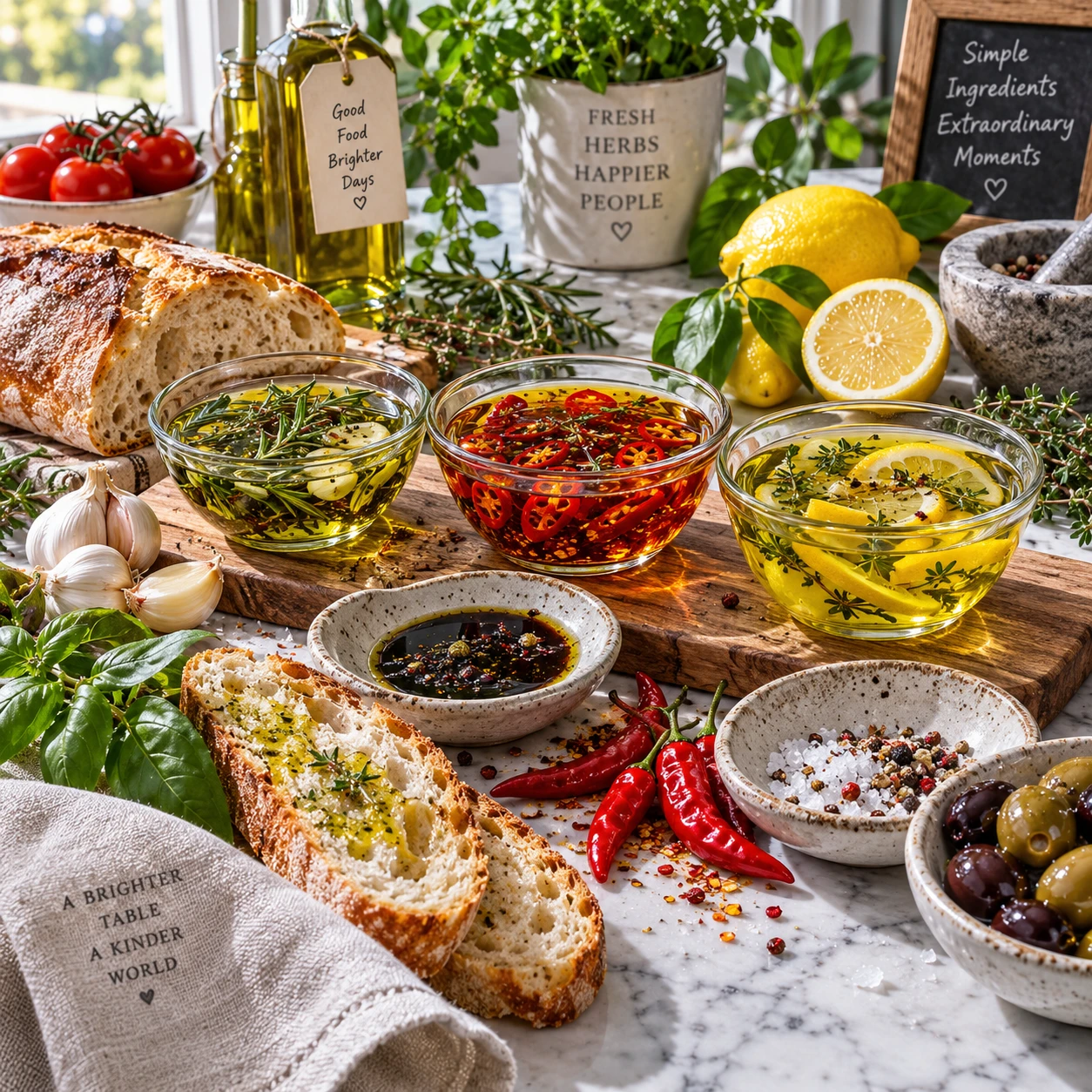
A drizzle of infused oil can give a familiar meal a new layer of flavor. With a few ingredients and a gentle stovetop method, you can make herb, chili, or citrus oils at home for sauces, dips, marinades, and finishing dishes. The key is to manage heat carefully and handle fresh ingredients safely.
What Is Infused Oil?
Infused oil is cooking oil flavored by steeping herbs, spices, or other aromatic ingredients in it. The oil carries their aroma and taste, making it useful as a finishing drizzle, a dressing ingredient, or a flavorful base for sauces.
Extra-virgin olive oil brings its own fruity or peppery character, so it works well with rosemary, thyme, garlic, and lemon zest. A neutral oil, such as canola or grapeseed, has a milder taste that lets chili peppers or delicate herbs stand out. Infusion can happen with gentle heat or by steeping ingredients in oil, but either approach needs careful food-safety handling when fresh ingredients are involved.
Think of infused oil as a finishing ingredient rather than a long-term pantry project. Homemade oils made with fresh garlic or herbs can create food-safety risks if stored improperly, so follow conservative storage guidance and make small batches.
Choose an Oil and Flavor Ingredients
Choose an oil whose flavor suits the ingredients and how you plan to use it. Extra-virgin olive oil adds a distinctive taste, while neutral oil gives the infused ingredients more room to shine.
For balanced flavor, use one main aromatic and one supporting note. Too many ingredients can muddy the result, especially in oil, where flavors accumulate and linger. A useful starting point is a clean pairing: thyme with lemon zest, dried chili with garlic, or rosemary with black pepper.
- Extra-virgin olive oil: Best for Mediterranean flavors, bread dipping, vinaigrettes, and finishing pasta or vegetables.
- Neutral oil: Canola or grapeseed oil suits chili infusions and recipes where you want the added flavor without a strong olive-oil profile.
- Fresh herbs: Provide vivid aroma, but contain moisture and need extra care in preparation and storage.
- Dried herbs and spices: Offer concentrated flavor with less moisture than fresh ingredients. Use food-grade ingredients and avoid anything damp or spoiled.
- Garlic and chili peppers: Add savory depth or heat. Fresh versions need cautious handling; dried versions are often easier to manage.
- Citrus zest: Adds bright fragrance. Remove only the colored outer peel, since the white pith can taste bitter.
Start with less chili than you think you need; heat can intensify as the oil rests. For citrus, a few strips of zest are usually enough for a small batch. Always wash fresh produce and dry it thoroughly before using it, though drying alone does not make fresh ingredients safe for room-temperature storage in oil.
How to Make Infused Oil at Home
To make infused oil with a controlled stovetop method, warm the oil gently with the flavor ingredients, let it steep, then strain and refrigerate the finished oil. Keep the heat low and avoid frying the aromatics.
- Prepare the ingredients. Wash fresh herbs or citrus, then dry them thoroughly. Peel garlic and lightly crush dried spices or chili flakes to release their aroma.
- Warm the oil. Add 1 cup of oil and your chosen ingredients to a small, clean saucepan. Heat over low heat until the oil is warm and fragrant, not smoking or bubbling vigorously. Avoid high heat, which can scorch herbs and flatten delicate flavors.
- Steep off the heat. Remove the pan from the burner and let the ingredients infuse for about 20 to 30 minutes. Taste a cooled drop with a clean spoon; if you want more flavor, steep a little longer.
- Strain and chill. Strain the oil through a clean fine-mesh sieve into a clean container. Refrigerate promptly, especially when the recipe includes fresh garlic or herbs, and label it with the date.
Use clean utensils and containers throughout, and make only what you can use promptly. Heating helps draw out flavor, but it does not make a homemade garlic- or herb-infused oil shelf-stable. Never leave fresh ingredients submerged in oil on the counter for extended storage.
Easy Infused Oil Recipes
These three infused oil recipes use familiar ingredients and work in small batches. Make each with 1 cup of oil, warm gently, steep off the heat, strain, and refrigerate.
Rosemary-thyme oil
Add 1 sprig of rosemary and 2 sprigs of thyme to extra-virgin olive oil. The woodsy herbs pair well with roasted potatoes, grilled vegetables, white beans, and bread. For a quick sauce, whisk a spoonful into lemon juice and Dijon mustard.
Chili oil
Warm 1 cup of neutral oil with 1 to 2 teaspoons of dried chili flakes. Start at the lower amount if you prefer mild heat. Drizzle over pizza, noodles, eggs, or tomato sauce, or stir a little into mayonnaise or yogurt dip. Dried chili gives a more predictable result than fresh peppers, but the finished oil still needs sensible storage.
Lemon oil
Use several wide strips of lemon zest with extra-virgin olive oil. Avoid the bitter white pith, and strain the zest out after steeping. This bright oil complements fish, steamed greens, vinaigrettes, and creamy sauces. Add it at the end of cooking to keep the citrus aroma fresh.
Keep the recipes simple the first time. Once you know the strength of your oil and ingredients, adjust the amounts in your next batch rather than trying to correct an overly strong infusion after the fact.
Food Safety and Storage
Homemade infused oil should be handled as a perishable food, particularly when it contains fresh garlic, fresh herbs, or other fresh produce. Refrigerate it promptly, keep it cold, and make small quantities rather than storing it at room temperature.
Oil creates a low-oxygen environment, and fresh ingredients can introduce conditions that require careful food-safety controls. The U.S. National Center for Home Food Preservation advises that homemade oils containing garlic or herbs be refrigerated and used within a short period; for current guidance, consult its information on [safe preservation of garlic and herbs in oil](https://nchfp.uga.edu/how/pickle/vegetable-pickles-pickled-products/). If you cannot confirm safe storage time for a particular recipe, make only enough for immediate use and discard leftovers rather than guessing.
- Use clean, dry equipment and sound ingredients.
- Refrigerate infused oil promptly; do not store fresh garlic or herbs submerged in oil at room temperature.
- Label the container with its preparation date and ingredients.
- Discard oil if it has been mishandled or you are uncertain about its storage history. Do not rely on smell or appearance alone to judge safety.
Dried ingredients generally contain less moisture, but that does not automatically make every homemade infusion shelf-stable. Follow a tested, authoritative recipe if you want a product for longer storage. When in doubt, make a fresh batch and keep it chilled.
Ways to Use Infused Oils with Sauces and Meals
Infused oils add aroma and flavor to sauces, marinades, dips, and finished dishes. Use them sparingly at first, then adjust to taste so the oil supports the other ingredients instead of overwhelming them.
- Dressings: Whisk lemon oil or herb oil with vinegar, mustard, and a little honey for a quick vinaigrette.
- Dips: Swirl chili oil into hummus, yogurt dip, or a tomato dip just before serving. A small drizzle gives contrast without making the whole dip too hot.
- Marinades: Combine herb oil with lemon juice, salt, and pepper for vegetables or chicken. For food safety, keep the marinade refrigerated and discard any that has touched raw meat unless you cook it thoroughly.
- Pasta and vegetables: Finish warm pasta, roasted vegetables, or beans with a teaspoon of oil after cooking to preserve its aroma.
- Soups and sauces: Add a few drops of chili or citrus oil to tomato soup, a creamy sauce, or a bowl of beans just before serving.
For a sauces-focused meal, try rosemary-thyme oil with a sharp mustard vinaigrette, or lemon oil over a creamy herb sauce. Keep the infused oil chilled between uses and bring out only the portion you need. That small habit protects both the flavor and the safety of the batch.